MinRes&LS-FEM 2026

Minimum Residual & Least-Squares Finite Element Methods

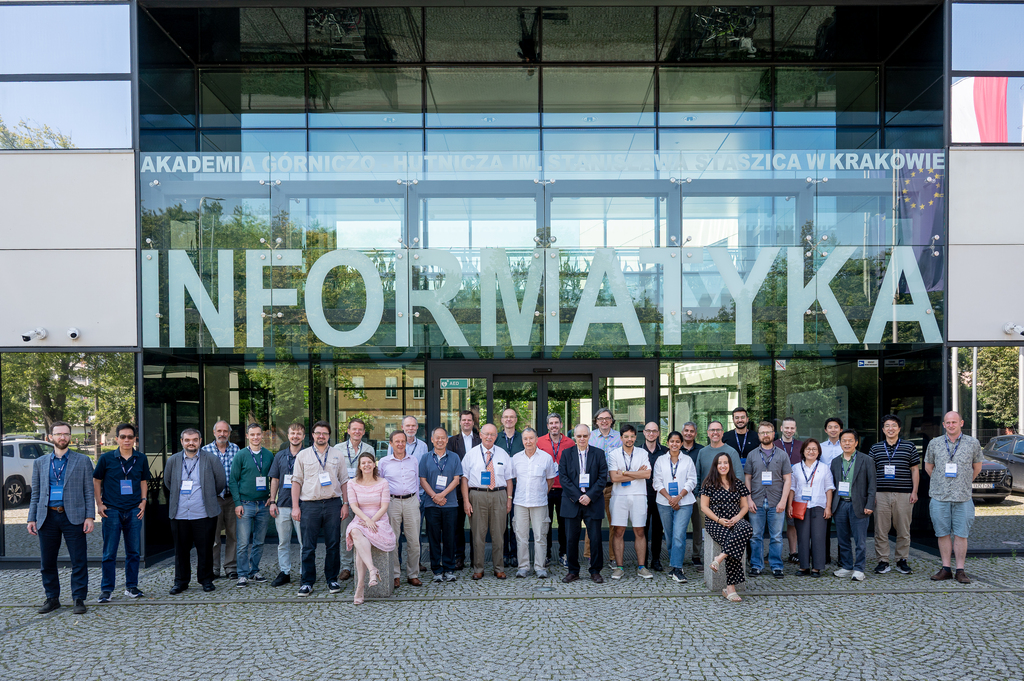
This conference aims to bring together leading international researchers in the area of residual minimization methods, including the Discontinuous Petrov-Galerkin method and Least-Squares Finite Elements. This is the seventh edition of this bi-annual event and it will take place at the Faculty of Computer Science, AGH University of Krakow, Poland from Monday, Jul 27, to Thursday, Jul 30, 2026.


The first conference of this series took place in Austin (USA) in 2013, followed by the second edition in Delft (Netherlands) in 2015, the third one in Portland (USA)  in 2017, the fourth one in Berlin (Germany)  in 2019, the fifth one in Santiago (Chile) in 2022, and the sixth one in Bilbao (Spain) in 2024.

July 27-30, 2026

Kraków

Poland

AGH
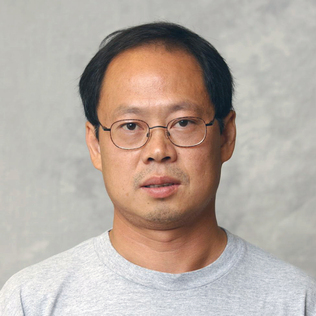
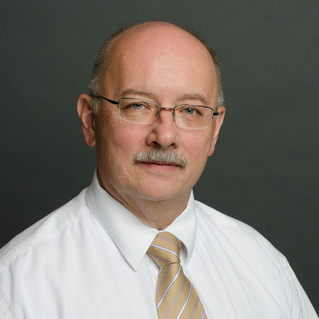
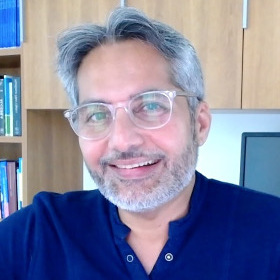
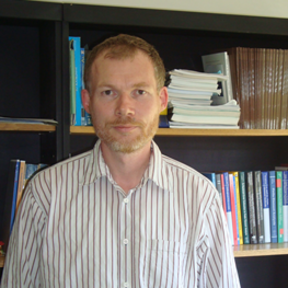
Scientific Committee

Chemnitz University of Technology, Germany

Sandia National Lab, USA

Purdue University, USA

Humboldt–Universität zu Berlin, Germany

University of South Carolina, USA

The University of Texas at Austin, USA

Portland State University, USA

Pontificia Universidad Católica de Chile, Chile

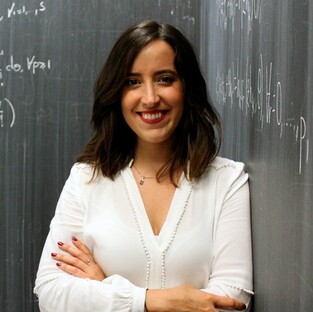
Judit Muñoz-Matute

The University of Basque Country, Spain
Universiteit van Amsterdam, Netherlands

Local Organizers

AGH University of Krakow, Poland

Maciej Woźniak

AGH University of Krakow, Poland
Tomasz Służalec

AGH University of Krakow, Poland
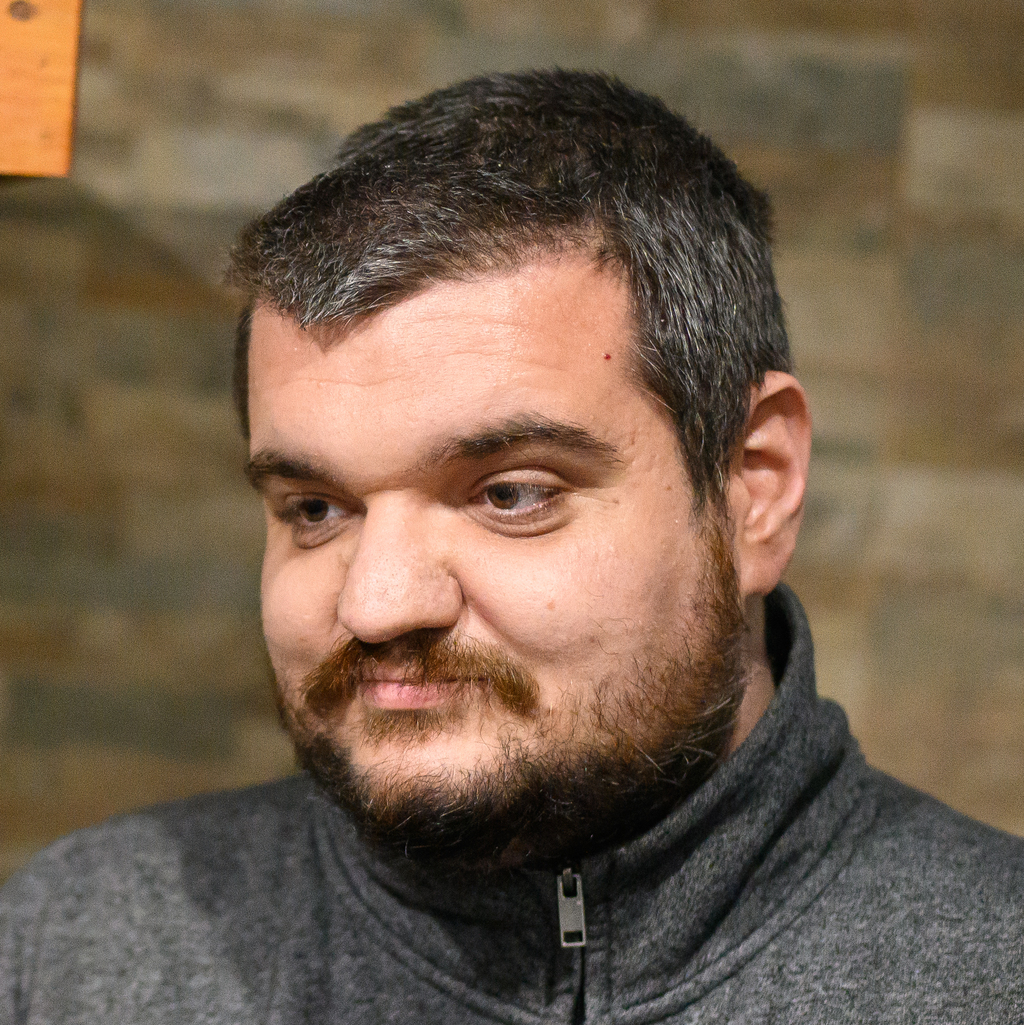
Marcin Łoś

AGH University of Krakow, Poland
Registration

We would like to kindly inform you that the deadline for payment of the MinRes 2026 workshop registration fee is March 23. Please use the following link to complete your payment:

www.tryit.org.pl/pl/wydarzenia2/wydarzenia


LaTeX template (click to download)

Program

More information comming soon

9:00- 9:30

Registration

9:30- 11:30

Session 1

  • Leszek Demkowicz, Bochner vs. Space-Time
  • Ignacio Muga, Residual Minimization for Nonlinear PDEs in Banach Spaces
  • Norbert Heuer, A DPG method for semilinear problems

11:30- 12:00

Coffee break

12:00 - 14:00

Session 2

  • David Pardo, The Impact of Quadrature Errors on Neural Network PDE Solvers: Mitigating Bias and Variance via FOSLS Formulations
  • Paulina Sepúlveda, An Energy-Based Least-Squares Approach for PDEs Using Neural Networks
  •  Chad Westphal, A Locally Relaxed Least-Squares Finite Element Method for the ∞-Laplace Problem
  •  Maciej Woźniak, A Hybrid MPI+OpenMP Fortran Implementation of Isogeometric ADS with Residual Minimization for Transient Problems

 14:00 - 15:30

Lunch break

15:30 - 17:00

Session 3

  • Huoyuan Duan, A Galerkin/Least-Squares Stabilized FEM by Virtual Element on Polytopal Meshes for The Reissner-Mindlin Plate Problem
  • Gerhard Starke, W1,∞ Shape Gradients from Least Mean Approximations of Shape Tensors
  • Victor M. Calo, Philipp Kopp, and Alberto F. Martin, Residual-Minimisation Correction of Finite Element Eigenpairs via Fine-Scale Enrichment

17:00 - 17:30

Coffee break

17:30 - 18:30

Session 4

  • Marcin Łoś, Evolutionary framework for optimizing PINN activation functions
  • Pablo Herrera, Ritz–Uzawa Neural Networks (RUNNs) for Solving Variational Problems

18:30 - 20:00

Reception

  • Brewery tour
  • Reception at AGH Brewery

9:30 - 11:30

Session 1

  • Jay Gopalakrishnan, DPG loss functions for neural networks
  • Rob Stevenson; A time-space adaptive solver of quasi-linearparabolic PDEs
  • K.G. van der Zee, Neural Network Dual Norms for Residual Minimization

11:30 - 12:00

Coffee break

12:00 - 14:00

Session 2

  • Philipp Bringmann, Global convergence of adaptive least-squares finite element methods for nonlinear PDEs
  • Christian Koethe, A space-time minimal residual method for nonlinear parabolic problems
  • Tomasz Służalec, Discrete Riesz Maps and Neural Minimum Residual Methods in Three Dimensions

14:00 - 15:30

Lunch break

15:30 - 17:00

Session 3

  • Maciej Paszyński, IGA-ODIL: A Residual Minimization Framework for PDEs in Spline Spaces
  • Federico Fuentes, Energy minimization using r -adaptive finite element methods and neural networks
  • Judit Muñoz-Matute, A multistage DPG-based time integration scheme for solving transient nonlinear problems

17:00 - 17:30

Coffee break

17:30 - 18:30

Session 4

  • Eun-Jae Park, Raviart-Thomas Staggered DG methods on polygonal meshes
  • Mi-Young Kim, A posteriori error estimate of the discontinuous Galerkin method with Lagrange multiplier for elliptic problems

20:00

Dinner

  • Conference dinner at Wierzynek - Rynek Główny 16

9:30 - 11:30

Session 1

  • Waldemar Rachowicz, Three-dimensional implementation of the Discontinuous Petrov-Galerkin method for the singularly perturbed reaction-diffusion problems
  • Wolfgang Dahmen, On the Convergence of Adaptive Least Squares Methods
  • Christian Wieners, Least-Squares approximations for linear convection problems in case of low regularity

11:30 - 12:00

Coffee break

12:00 - 14:00

Session 2

  • Jaime David Mora Paz, Three-dimensional DPG simulations to study bending power losses in optical fibers
  • Fleurianne Bertrand, Local Quasi-equilibration of fluxes with the Least-Squares method
  • Emin Benny-Chacko, Inexcat Uzawa-Double Deep Ritz Method for Weak Adversarial Neural Networks
  • Jonathan Zhang, Nonlinear Elasticity with the DPG Method

14:00 - 15:30

Lunch break

15:30 - 17:00

Session 3

  • Thomas Führer, Sergio Rojas, Stabilized MINRES
  • Nathan V. Roberts, First Efforts at Tensor-Train for Space-Time DPG Problems
  • Zhiqiang Cai, Structure-guided Gauss-Newton and Newton methods for non-convex optimization problems arising from ReLU neural network approximations
  • Constantin Bacuta, Oscillatory Behavior in Convection-Diffusion Discretization

17:00 - 17:30

Coffee break

17:30 - 18:30

Session 4

  • Weifeng Qiu, Analysis of a finite element method for second order uniformly elliptic PDEs in non-divergence form
  • Shun Zhang, Quantity-of-Interest Based Adaptive LSFEMs with Physically Meaningful Dual PDE and Built-in Estimators

10:00

Salt Mine Excursion

Lots of fun

Details - TBA

Venue

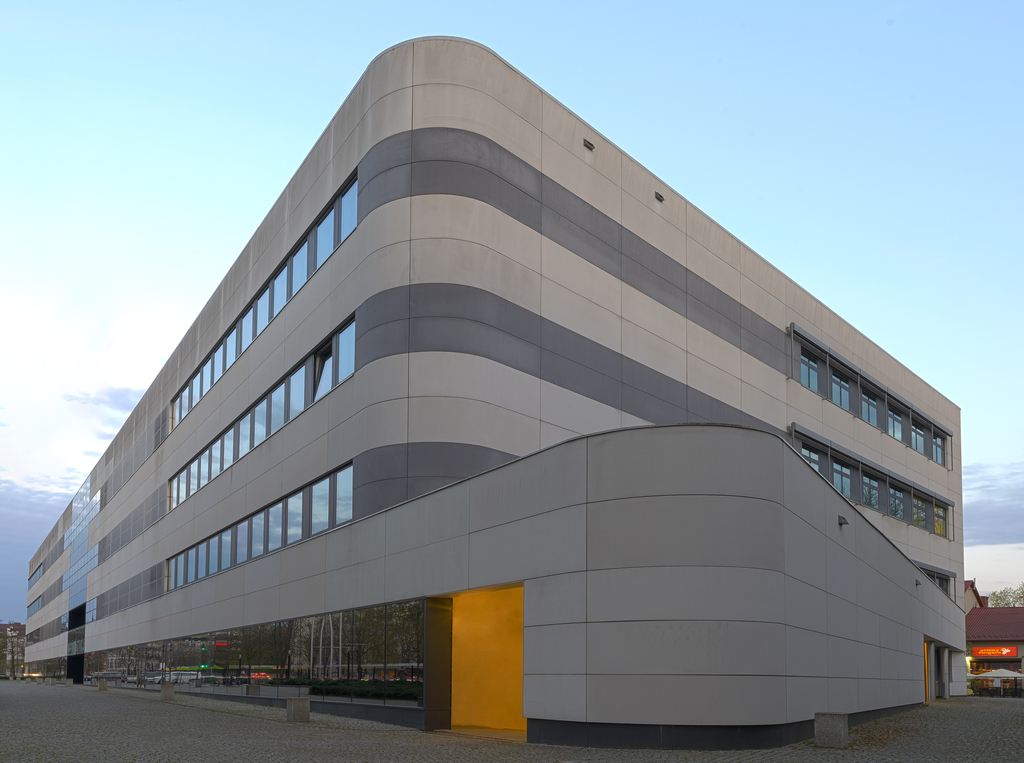
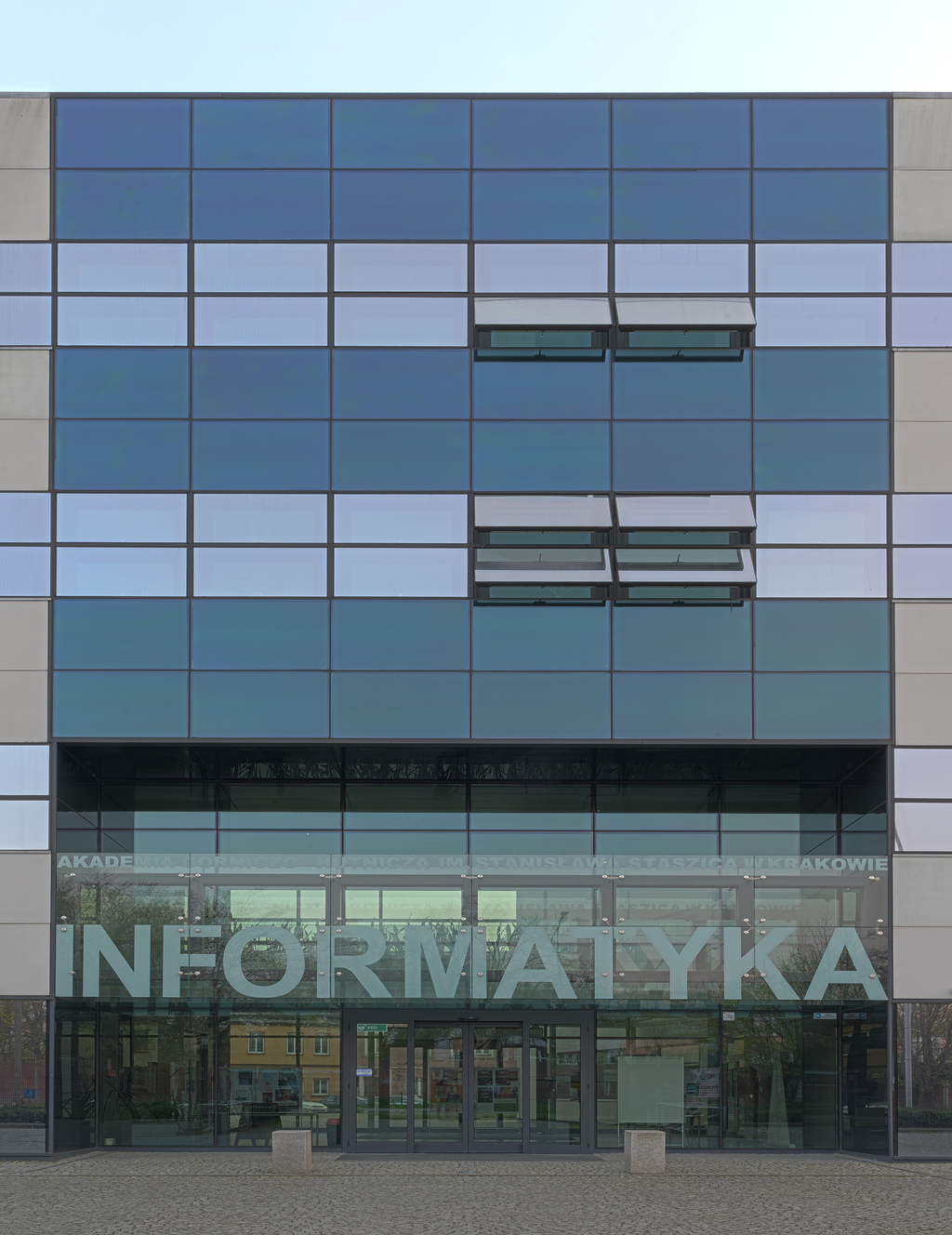
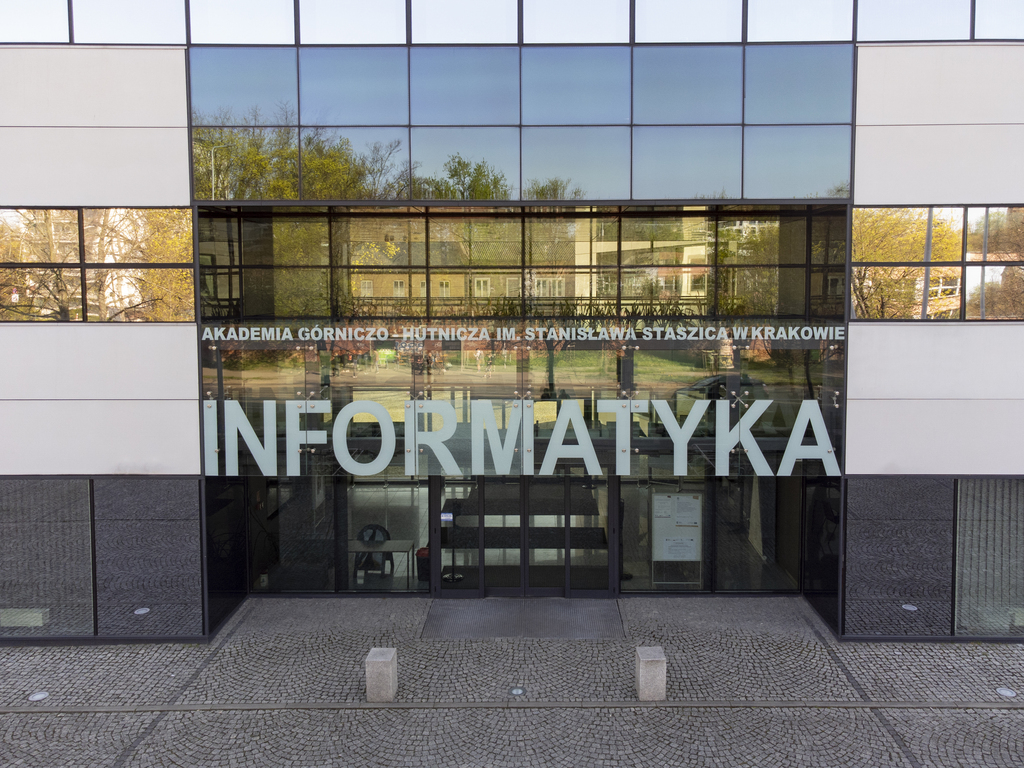
The workshop will take place at Faculty of Computer Science, AGH University of Krakow

AGH
Building D17

Kawiory 21

30-059